

Rising 180 meters above the central dry-zone plains, Sigiriya is one of the most recognizable historic landmarks in Sri Lanka. In the fifth century CE, King Kashyapa selected this massive column of reddish-black granite as the site for his royal residence and fortress. Today, the monument stands as a UNESCO World Heritage site that combines ancient hydraulic engineering, sheltered cliff paintings, landscaped water gardens, and dramatic summit foundations. If you are planning to visit, this guide covers realistic climb times, ticket prices, stair counts, and practical tips to help you get the most out of your morning.
Where Is Sigiriya and How Do You Get There?
Sigiriya is located in the Matale District within the northern central plains of Sri Lanka, roughly 170 kilometers northeast of Colombo. It forms the northern anchor of the island’s Cultural Triangle, positioned between Dambulla and Habarana. Because of its central location, most travelers use nearby Habarana, Dambulla, or Sigiriya village as their overnight base.
Driving to Sigiriya from Bandaranaike International Airport or Colombo typically takes between 3.5 and 4 hours via the Central Expressway (E04) and Kurunegala road. From Kandy, the scenic drive north takes approximately 2.5 hours through the town of Matale. If you are traveling north from the southern beaches (such as Galle, Mirissa, or Bentota), expect a drive time of 5 to 5.5 hours along the expressway network. Because roads in the central plains are frequented by local buses and agricultural vehicles, traveling in a private air-conditioned vehicle with an experienced driver-guide makes the journey far more comfortable, allowing you to store your bags safely and arrive refreshed for an early morning climb.
When Is the Best Time to Visit and Climb?
Timing your climb at Sigiriya makes a huge difference to your physical comfort. The rock is an exposed black granite monolith that absorbs sunlight and radiates intense heat as the day progresses. Temperatures in the Cultural Triangle regularly reach 33°C to 35°C (91°F to 95°F) between 11:00 AM and 3:00 PM.
We strongly recommend entering the site at 7:00 AM when the ticket office and entrance gates open. Starting at 7:00 AM gives you several key advantages:
- Cooler Air: The morning breeze across the water gardens keeps the initial 600 steps comfortable.
- Soft Morning Light: Photographers will appreciate the gentle morning sunlight illuminating the western rock face and the surrounding forest canopy.
- Fewer Crowds: Large tour groups generally arrive between 9:00 AM and 10:30 AM, creating queues along the narrow metal stairways. Starting early means you will be descending just as the crowds begin to build.
If an early morning climb does not fit your schedule, late afternoon (from 3:30 PM to 5:00 PM) is the second-best window. The rock casts long shadows across the plains, and the summit breeze picks up as the sun drops toward the horizon. Avoid climbing between 11:00 AM and 2:30 PM under any circumstances, as the stone steps become uncomfortably hot and the climb is physically taxing in direct midday sun.
In terms of seasons, December through April provides clear, dry weather across the central plains. May through September is warm and breezy with occasional evening showers that rarely interrupt morning climbs. October and November bring the inter-monsoon rains; while the surrounding countryside turns lush and green, the stone staircases can be slippery after heavy rain, requiring sensible footwear with good grip.
What to Expect on the Climb: Step-by-Step
The entire visit, from the main ticket gate across the water gardens to the summit and back down, involves approximately 1,200 steps and covers around 2.5 to 3 kilometers of walking. Most travelers of average fitness complete the round trip in 2 to 2.5 hours, including photo stops.
1. The Royal Water Gardens
After passing the ticket checkpoint, you walk down a wide, paved central axis flanked by ancient water pavilions, bathing pools, and underground terracotta piping systems. Built more than 1,500 years ago, these hydraulic systems still function after heavy seasonal rains. The symmetrical layout reflects sophisticated urban design principles, with the sheer vertical face of Sigiriya rising directly ahead of you.
2. The Boulder Gardens and Terraces
As you approach the foot of the monolith, the path winds between giant granite boulders that once supported timber-framed monastic pavilions and guard stations. Here, the stone steps begin to climb upward in short flights. Take your time along this section to maintain a steady walking rhythm.
3. The Spiral Staircase and Sigiriya Frescoes
Roughly halfway up the western rock face, a sheltered metal spiral staircase leads to an enclosed natural rock pocket. Here, painted onto a thin layer of plaster, are the famous Sigiriya Frescoes. These 19 surviving paintings depict elegant female figures carrying lotus flowers and trays of blossoms. Scholars continue to debate whether they represent celestial nymphs (Apsaras) or ladies of the royal court. Photography of the frescoes is strictly prohibited to preserve the natural mineral pigments from flash damage.
4. The Mirror Wall and Ancient Graffiti
Exiting the fresco gallery, you walk along a sheltered brick pathway known as the Mirror Wall. In ancient times, this masonry wall was coated with a fine lime plaster made of egg whites, honey, and lime, polished until it reflected the king’s image. Between the 6th and 14th centuries, visitors carved poetic verses and commentary into the plaster, providing historians with invaluable samples of classical Sinhala script.
5. The Lion Platform
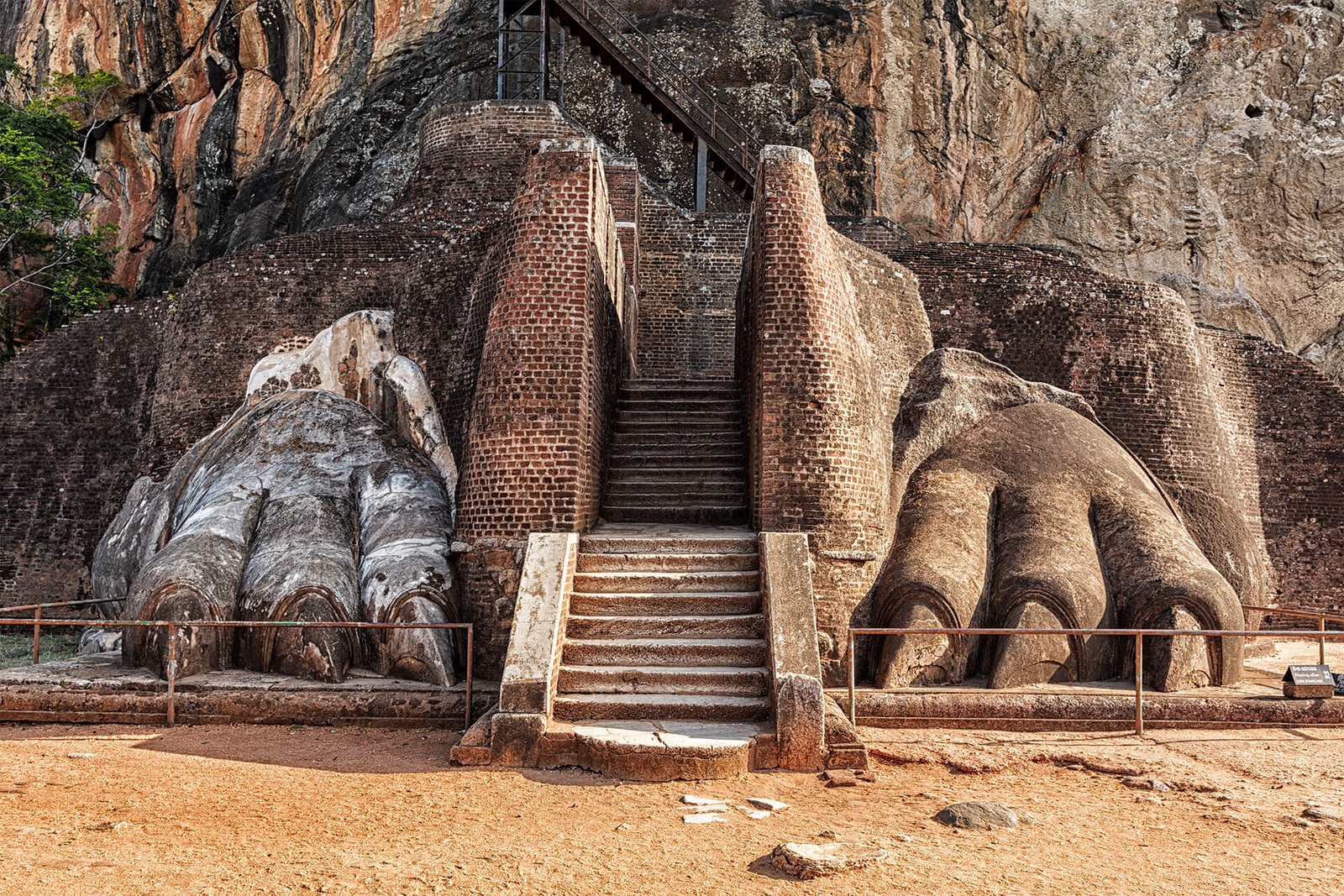
After passing along the Mirror Wall, you arrive at a wide open plateau on the northern side of the rock. This is the Lion Platform. In antiquity, an enormous brick-and-mortar lion sat here, and visitors ascended into the palace through its open mouth. Today, two massive carved stone paws flank the final iron staircase. This platform is a natural spot to drink water, rest your legs in the shade, and take photos before the final vertical ascent.
6. The Summit Plateau
The final staircase clings to the vertical rock face, protected by sturdy steel railings. At the top, you emerge onto a 1.6-hectare summit plateau terraced into stone foundations. You can walk through the remains of the royal palace, view the royal throne carved into bedrock, and look out over the large rock-cut swimming pool. The 360-degree views stretch across emerald forest canopies, distant blue mountain ridges, and rural irrigation lakes.
| Visit Detail | Practical Information |
|---|---|
| Opening Hours | Open daily from 7:00 AM to 5:30 PM (Ticket office closes at 5:00 PM) |
| Foreign Adult Ticket | US $36 (approx. 11,500 LKR) — includes entry to the Sigiriya Archaeological Museum |
| Total Steps | Approximately 1,200 steps to the summit plateau |
| Time Required | 2 to 2.5 hours at a relaxed, comfortable pace |
| Physical Rating | Moderate. Good handrails throughout; requires steady footing |
Sigiriya vs. Pidurangala: How Do They Compare?
Just two kilometers north of Sigiriya sits Pidurangala Rock, a neighboring natural granite outcrop with an ancient cave monastery at its base. Many travelers ask whether they should visit Sigiriya, Pidurangala, or both.
Sigiriya is an archaeological and historical treasure. It offers manicured water gardens, ancient engineering, fifth-century frescoes, the Mirror Wall, and the royal palace foundations on top. Entry costs $36 USD, and the path consists of structured stone and iron stairs.
Pidurangala is an adventure hike rather than a palace tour. Entry is approximately $3 USD (1,000 LKR). The trail passes through forest and an ancient reclining Buddha statue before requiring a scramble over large granite boulders near the top. The summit of Pidurangala offers an unobstructed, direct view of Sigiriya Rock itself. It is particularly popular for sunrise photography.
What to Wear and Pack for the Climb
- Footwear: Wear comfortable walking shoes, trail runners, or supportive sneakers. While flip-flops can technically be worn, the uneven stone steps and iron treads are much easier to manage in closed-toe shoes.
- Clothing: Lightweight, breathable cotton or linen clothing is ideal. Because Sigiriya is an archaeological monument rather than an active temple, modest shorts and t-shirts are acceptable. However, keep shoulders and knees covered if you plan to visit nearby temples on the same day.
- Hydration: Bring at least 1 to 1.5 liters of drinking water per person. There are no vendor stalls or water taps once you pass the ticket checkpoint.
- Sun Protection: A wide-brimmed sun hat, sunglasses, and reef-safe sunscreen are essential, especially on the exposed summit plateau.
Common Mistakes to Avoid at Sigiriya
To ensure a smooth visit, keep these practical points in mind:
- Avoid Unofficial Guides at the Entrance: Only hire licensed tour guides carrying official identification badges issued by the Central Cultural Fund. Agree on the fee clearly before beginning the tour.
- Do Not Photograph the Frescoes: Security staff strictly enforce the no-photography rule in the fresco pocket to protect the delicate plaster. Cameras and mobile phones must remain stowed in your bag while in this area.
- Watch for Wild Hornets: Occasionally, giant Asian honeybees nest on the high rock overhangs. If you see park warning signs or notice bees buzzing, walk quietly without shouting, waving your arms, or using camera drones, which are strictly prohibited.
- Keep Your Ticket Handy: You will need to show your entrance ticket at several intermediate checkpoints, including the base of the spiral staircase.
Why a Private Tour Makes Visiting Sigiriya Easy
Visiting Sigiriya as part of a private tour with Tharu Tours Lanka takes the stress out of regional travel. Your dedicated driver-guide picks you up from your hotel in a comfortable, air-conditioned vehicle, timing your arrival at the ticket counter precisely for the 7:00 AM gate opening. While you climb, your luggage remains secure in the car, and cold bottled water is waiting for you when you return. Afterward, you can easily continue on to the Dambulla Cave Temples, a peaceful rural lunch, or an afternoon elephant safari in Minneriya without dealing with local bus connections or multiple taxi negotiations.
