

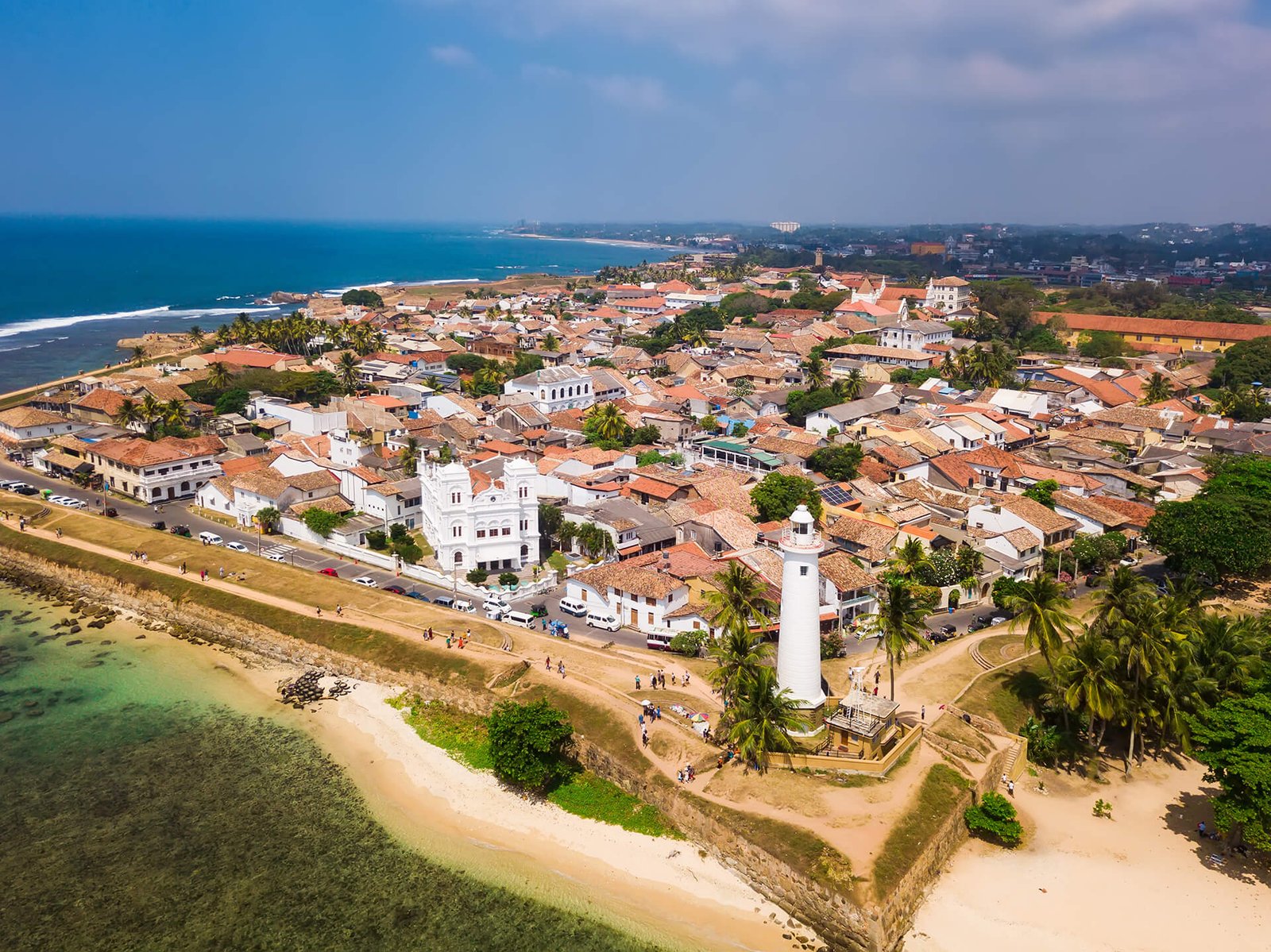
Situated on a dramatic rocky promontory overlooking the Indian Ocean in southwest Sri Lanka, the Galle Dutch Fort is the best-preserved European colonial fortress in South Asia. Originally fortified by the Portuguese in 1588 and extensively rebuilt into an impregnable stone bastion by the Dutch East India Company (VOC) during the seventeenth century, the fort today is a UNESCO World Heritage site and a thriving, living heritage town. Within its thick granite ramparts, quiet cobblestone lanes are lined with Dutch colonial villas, centuries-old churches, the historic white lighthouse, and pleasant shaded cafes. This guide outlines the best walking route along the ramparts, key architectural sights, and practical tips for your visit.
A Brief History of the Fort
Galle has been an active international trading port for over two thousand years, mentioned in ancient trade records from Persian, Arab, Greek, and Chinese mariners. In 1505, a Portuguese fleet commanded by Lourenço de Almeida was blown off course by a storm and took shelter in Galle harbor. The Portuguese recognized the bay’s strategic importance and constructed a fortified palm-tree redoubt known as Santa Cruz.
In 1640, the Dutch East India Company joined forces with King Rajasinghe II of Kandy to storm the Portuguese stronghold. Upon capturing the settlement, the Dutch decided to rebuild the entire perimeter wall, replacing earth and timber palisades with solid granite and coral blocks. They constructed 14 massive defensive bastions, complete with underground drainage channels, gunpowder magazines, and wide artillery ramparts. The British took control of the fort in 1796 without a battle, maintaining the fortress largely intact while adding a gate and the iconic white lighthouse at Point Utrecht Bastion.
Best Time of Day to Walk the Fort
Because the stone ramparts face the open sea without natural tree shade, walking under the midday sun can be uncomfortably warm. We recommend visiting in the late afternoon, starting around 4:00 PM. As the sun sinks toward the horizon, the sea breeze picks up, temperatures drop, and the stone walls glow in warm golden tones. Local families, school children playing cricket, and international travelers gather on the western bastions to watch the sun set over the ocean.
Alternatively, an early morning walk between 6:30 AM and 8:00 AM offers quiet streets, peaceful bird song, and cool temperatures before shops open and day visitors arrive from nearby beach towns.
The Complete Rampart Walking Route
The perimeter ramparts extend for roughly 2.5 kilometers. Walking the entire loop takes between 1.5 and 2 hours at an easy stroll with plenty of photo stops:
1. The Main Gate and Sun Bastion
Begin your walk at the Main Gate, built into the heavy northern wall by the British in 1873 to facilitate vehicle traffic into the fort. Climb the grassy slope to the Sun Bastion, which overlooks the international cricket stadium and the harbor. From here, you can observe the solid engineering of the landward defense wall that once protected the settlement from interior Kandyan forces.
2. Zwart Bastion (Black Bastion)
Moving east toward the harbor mouth, you reach Zwart Bastion, believed to be the oldest surviving stone structure in the fort, incorporating remnants of the earlier Portuguese fortifications. It overlooks the active naval anchorage and the commercial port of Galle.
3. Point Utrecht Bastion and the Galle Lighthouse
Following the rampart wall south brings you to Point Utrecht Bastion, home to Sri Lanka’s oldest light station. The current 26.5-meter cast-iron white lighthouse was erected in 1939 to replace an earlier 1848 structure destroyed by fire. Framed by tall coconut palms and turquoise ocean waves, this is the most photographed spot in the entire fort.
4. Flag Rock Bastion
Continuing west around the southern tip of the promontory, you reach Flag Rock Bastion. During Dutch rule, signals were hoisted here from a tall flagstaff to guide merchant ships through the dangerous reefs lining the harbor entrance. Today, local daredevils occasionally dive from the rocky cliffs into the shallow sea swells below, and street vendors sell roasted spiced chickpeas and fresh king coconut.
5. Triton and Star Bastions for Sunset
The western ramparts stretch from Flag Rock past Triton Bastion and Neptune Bastion toward the Clock Tower. This wide grassy embankment offers wide ocean views and is the best location inside the fort to sit and watch the sunset.
| Visitor Information | Details |
|---|---|
| Fort Entry Fee | Free (The fort is a public, open residential neighborhood) |
| National Maritime Museum | Approx. 1,000 LKR (inside the Dutch Warehouse at the Old Gate) |
| Historical Mansion Museum | Free entry (donations welcome; display of colonial antiques) |
| Recommended Time | 2 to 3 hours for rampart walk plus street exploration |
| Footwear | Comfortable walking shoes, sandals, or sneakers |
Historic Streets and Architectural Highlights Inside the Walls
After completing the rampart circuit, step down into the interior streets. The grid layout designed by the Dutch remains largely unaltered:
- The Dutch Reformed Church (Groote Kerk): Built in 1755 on Church Street, this historic place of worship features gabled Dutch facades, a quiet interior paved with carved gravestones from the old cemetery, and a historic organ loft.
- The Old Dutch Hospital: A colonnaded two-story hospital complex dating back to the late seventeenth century, beautifully restored into a waterfront dining and boutique arcade overlooking the harbor.
- The National Maritime Museum: Located inside the thick stone vaults of the 1671 Dutch Warehouse near the Old Gate, this museum displays ship models, historical maps, and artifacts recovered from local shipwrecks.
- Pedlar Street and Leyn Baan Street: These atmospheric lanes feature restored Dutch colonial townhouses with red terracotta roof tiles, wide verandas, and heavy wooden shutters, now housing boutique jewelers, tea merchants, and art galleries.
Practical Advice for Visiting Galle Fort
- No Entrance Fee: Unlike many archaeological monuments in Sri Lanka, entering Galle Fort is completely free of charge. You can walk through the gates and explore the ramparts at any hour of the day or night.
- Respect Active Residential Life: Galle Fort is a living community home to multi-generational Sri Lankan families, schools, courts, and mosques. Please dress respectfully when exploring residential lanes and avoid entering private courtyards without an invitation.
- Bicycle and Foot Traffic: The interior streets are narrow with limited parking. Walking is by far the easiest and most enjoyable way to explore.
Photography and Sunset Tips Along the Ramparts
For photographers, Galle Fort provides endless opportunities. Between 4:30 PM and 6:00 PM, the warm light against the ochre stone walls and whitewashed colonial buildings creates ideal conditions for architecture and street photography. The best vantage points for wide ocean compositions are from Flag Rock Bastion looking toward the lighthouse, and from the grassy slope of Triton Bastion looking west into the sunset. If you enjoy portrait photography, the quiet residential backstreets along Light House Street and Church Cross Street offer classic colonial arches, wooden antique doorways, and flowering bougainvillea vines.
Combining Galle Fort with Nearby South Coast Beaches
Galle sits conveniently at the hub of the southern coastal belt. You can easily spend your morning surfing or swimming in Unawatuna, Dalawella, or Ahangama, and drive 15 to 25 minutes into Galle Fort for late afternoon sightseeing and an evening dinner.
On our 5-Day Honeymoon Tour, Galle Fort provides a romantic cultural afternoon between beach days in Bentota. On our 7-Day Highlights Tour, 9-Day Cultural Tour, and 14-Day Classic Loop, exploring Galle Fort serves as the grand colonial finale before you take the fast expressway up to Colombo Airport.
