

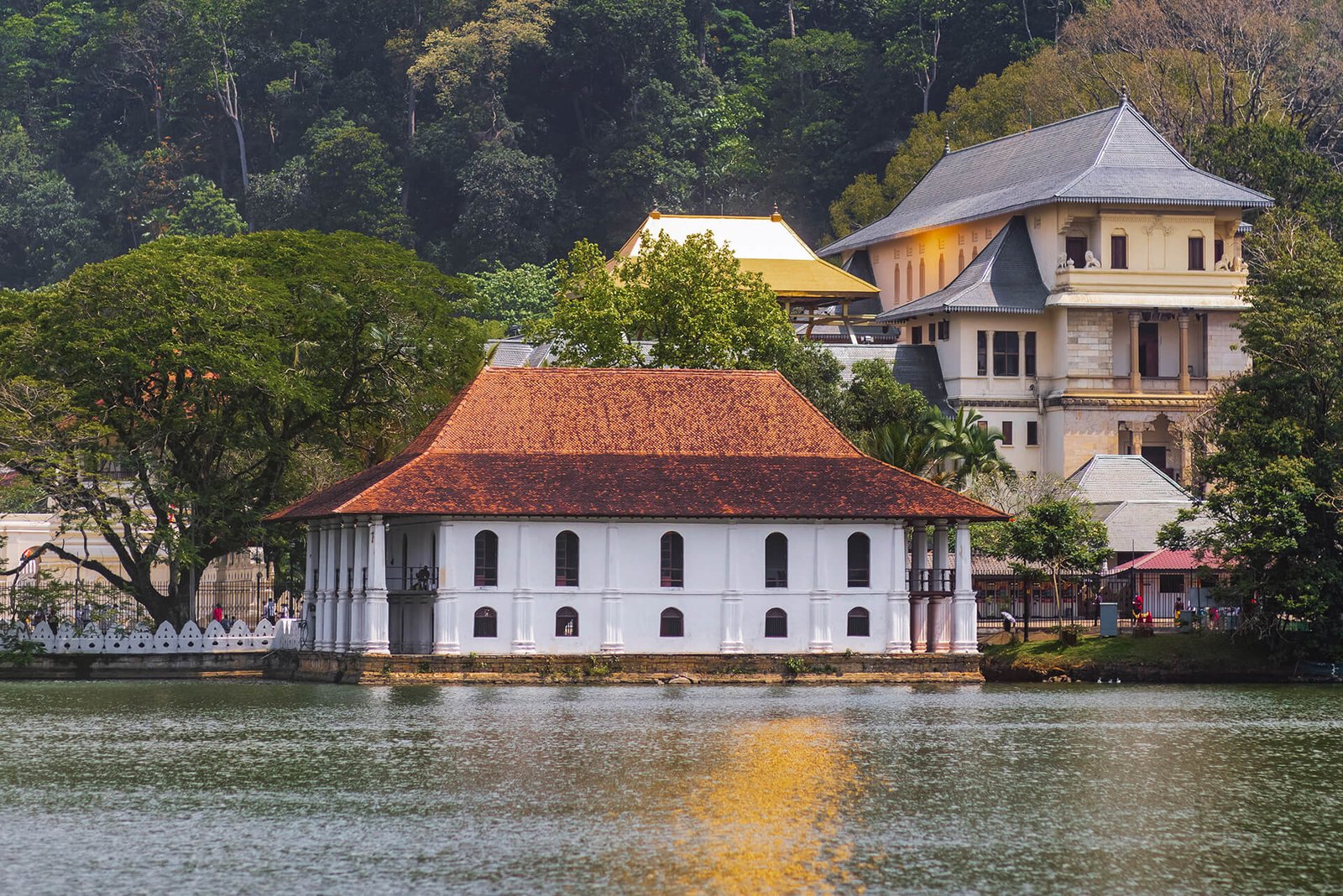
Surrounded by mist-covered mountain ridges and situated around a central ornamental lake, the royal city of Kandy was the last independent monarchy in Sri Lanka, retaining its sovereignty for over two centuries after the Portuguese and Dutch colonized the coastal regions. Captured by the British in 1815, Kandy remains the cultural and spiritual heart of the island. It is home to Sri Lanka’s most revered Buddhist shrine—the Temple of the Sacred Tooth Relic (Sri Dalada Maligawa)—as well as the world-renowned Royal Botanical Gardens at Peradeniya. This comprehensive visitor guide covers temple etiquette, prayer service timings, garden highlights, and local travel advice.
Where Is Kandy and How Do You Get There?
Kandy is located in the Central Province of Sri Lanka, roughly 115 kilometers northeast of Colombo, at an altitude of approximately 500 meters above sea level. Its position serves as the natural geographical gateway connecting the low-lying coastal plains with the high mountain tea country.
Travel times from key locations:
- From Colombo or Airport (Approx. 3 to 3.5 Hours): Driving via the Central Expressway (E04) to Mirigama/Kurunegala and ascending the Kadugannawa mountain pass takes around three hours in normal traffic.
- From Sigiriya / Cultural Triangle (Approx. 2.5 Hours): Heading south along the A9 highway via Matale passes through scenic spice-growing hills.
- From Nuwara Eliya (Approx. 2.5 Hours): The winding mountain road leads north through Ramboda and tea estates down to Kandy.
Because traffic inside Kandy’s narrow valley can become congested during morning and afternoon school rush hours, having a dedicated private driver who knows local side roads and drop-off points makes exploring the city comfortable and efficient.
Visiting the Temple of the Sacred Tooth Relic (Sri Dalada Maligawa)
The Temple of the Tooth is an active place of pilgrimage and the spiritual centerpiece of Sri Lankan Buddhism. According to historical tradition, the left canine tooth of Gautama Buddha was brought to Sri Lanka in the fourth century CE, hidden in the hair of a royal princess. Ownership of the relic historically confirmed a monarch’s divine right to rule the island.
1. Puja (Prayer Service) Timings
While the temple complex is open throughout the day, the inner sanctum where the golden casket is housed is only opened during traditional daily rituals, known as pujas. During these services, traditional drummers play in the lower hall, incense fills the air, and hundreds of pilgrims carry lotus blossoms to the upper chamber:
- Morning Puja: 5:30 AM – 7:00 AM (The quietest, most atmospheric service of the day)
- Midday Puja: 9:30 AM – 11:00 AM
- Evening Puja: 6:30 PM – 8:00 PM (Lively, vibrant service with many local worshipers)
2. Temple Dress Code and Etiquette
As this is an active religious shrine, dress regulations are strictly enforced by temple security at the entrance:
- Cover Shoulders and Knees: Both men and women must wear clothing that covers their shoulders and extends past their knees. Sleeveless tops, tank tops, and short shorts are strictly prohibited.
- Wear White or Light Colors: While not mandatory, wearing white or light-colored clothing is a sign of respect and aligns with local worshipers.
- Remove Shoes and Hats: All footwear (including socks) and head coverings must be removed at the footwear storage counters before crossing the outer moat. A small tip (approx. 100 LKR) is customary when retrieving your shoes.
- Photography Rules: Photography is permitted in the open courtyards and outer hallways, but you must never turn your back on a Buddha statue to take a selfie. Never photograph worshipers during private prayers.
| Detail | Temple of the Tooth Information |
|---|---|
| Opening Hours | Open daily from 5:30 AM to 8:00 PM |
| Foreign Adult Ticket | Approx. 2,000 LKR (US $6.50) — includes access to the inner temple and museum |
| Dress Code | Modest clothing covering shoulders and knees; shoes removed at entrance |
| Recommended Time | 1.5 to 2 hours for the temple and royal palace grounds |
Walking the Royal Botanical Gardens at Peradeniya
Located roughly 5.5 kilometers west of Kandy city center along the banks of the Mahaweli River (Sri Lanka’s longest river), the Royal Botanical Gardens at Peradeniya cover 147 acres and trace their origins back to a fourteenth-century royal pleasure garden. Formally developed under British botanists in 1821, the gardens contain over 4,000 species of tropical plants, spices, and historic trees.
Key Garden Highlights
- The Orchid House: A curated indoor display featuring more than 300 varieties of tropical orchids, including rare indigenous species and colorful hybrids.
- The Avenue of Royal Palms: A tall, straight avenue of royal palms (Roystonea regia) planted in 1905, creating an iconic cathedral-like archway.
- The Giant Javan Fig Tree: Located on the central Great Lawn, this enormous specimen covers nearly 2,500 square meters with its sprawling horizontal canopy supported by surface root buttresses.
- The Spice Garden: A quiet section showcasing cinnamon trees, nutmeg, cardamom, black pepper vines, and vanilla, demonstrating Sri Lanka’s indigenous spice crops.
- The Suspension Bridge: A historic iron suspension bridge spanning the wide brown waters of the Mahaweli River at the northern edge of the gardens.
Visitor Details: Open daily from 7:30 AM to 5:00 PM. Foreign adult entry is approximately 3,000 LKR (around $10 USD). Allow roughly 2 to 2.5 hours to walk the primary garden paths at a relaxed pace.
Other Highlights in Kandy Town
- Kandy Lake (Kiri Muhuda): Created in 1807 by King Sri Wickrama Rajasinghe, this artificial lake forms the centerpiece of the city. A 3.2-kilometer flat walking path encircles the water, shaded by historic rain trees and offering peaceful morning views.
- Udawatta Kele Forest Sanctuary: Located directly on the mountain ridge behind the Temple of the Tooth, this historic royal forest reserve spans 104 hectares of dense tropical wilderness. Centuries ago, Kandyan kings used the forest as an emergency sanctuary during invasions. Today, quiet walking tracks lead through bamboo thickets, giant lianas, and towering mahogany trees. It is one of the best locations in the central hills to view endemic forest birds, including the layard’s parakeet and yellow-fronted barbet, away from city noise.
- Traditional Cultural Dance Performance: Every evening around 5:00 PM, local cultural centers near the lake present a one-hour showcase of traditional Kandyan drumming, masked devil dances, acrobatics, and fire-walking rituals.
- The Annual Kandy Esala Perahera (July / August): If you are traveling in late summer, Kandy hosts the grandest Buddhist festival in Asia. Over ten nights leading up to the Nikini full moon, the city streets are filled with dozens of decorated elephants, hundreds of whip-crackers, fire-dancers, and thousands of traditional drummers honoring the sacred tooth relic. Viewing seats along the procession route should be booked several months in advance.
- Arthur’s Seat Viewpoint: A roadside viewpoint situated high on the southwestern hills above Kandy Lake, offering panoramic vistas across the entire valley, the temple complex, and the distant Knuckles Mountain Range.
Why Kandy Fits Naturally into Your Private Route
Kandy serves as the natural bridge between the ancient monuments of the Cultural Triangle and the cool mountain tea estates. On our private tours, you can climb Sigiriya Rock in the morning, stop at Dambulla Cave Temple for an hour, and arrive in Kandy by mid-afternoon with plenty of time to attend the evening temple ceremony.
